(common) THRESHER SHARKS
scientific name: Alopias vulpinus
click on the image for all of my resources!!
by: victoria nikolaou
yosuke hanamura
yosuke......
hanamura......
ANATOMICAL STRUCTURES OF THE THRESHER SHARK
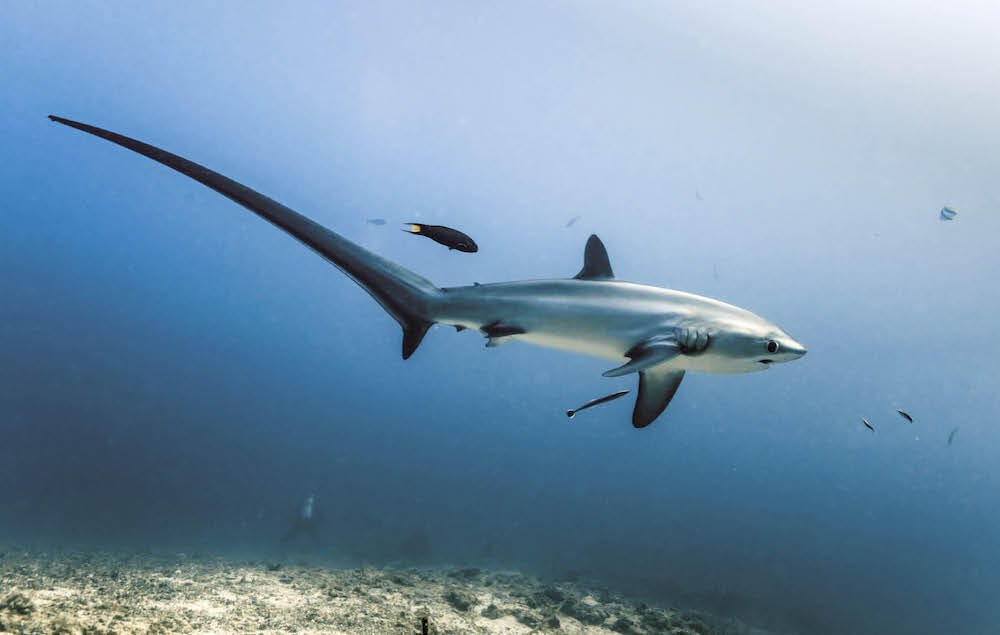
GENERAL DESCRIPTION: A thresher shark is an easily identifiable shark, given its long upper lobe tail. There are variations of the thrasher shark, like the Alopias pelagicus and the Alopias superciliosus. These sharks are a combination of dark brown and slate grey, but also have been seen in black; their underside is always white. They have two pectoral fins near its gill slits that are narrow tipped, its pelvic fins are very small and its dorsal fin is ahead of the pelvic fins.
SIZE RANGE:
- these sharks can row up to eighteen feet, and are "mature" when they reach around a height of around ten feet.
- normally they weigh around 500lbs when mature
- the longest recorded weight of a thresher shark was over 750 pounds!
REPRODUCTIVE HABITS
Thresher sharks reproduce internally and reproduce using a method called aplacental viviparity or known as being ovoviviparous which is where eggs hatch in the mother to which she will give live birth to her children. Anywhere between two to six live pups will be born at a time. They will usually weigh anywhere between 20-50 pounds and are usually around 4 feet in length.
FUN FACTS!!
1. During development, a pup will most likely cannibalize one or multiple of their siblings in the uterine chamber.
2. They are one of the few sharks who are able to jump out of the water!
3. The first sighting of a Thresher shark giving birth was recorded only in 2023.
4. The common Thresher shark mating time is in late summer
5. Their upper lobe tail is usually half the size or as long as their body
article about thresher sharks!: https://www.nationalgeographic.com/science/article/shark-mystery-solved-how-thresher-sharks-use-their-tails
HABIT AND POPULATION
They are usually found in tropical to temperate ocean waters. These sharks can be found in the Atlantic, Pacific, and Indian oceans.
These sharks' primary food source is bony fish, but species such as shrimps and crabs are not unusual for the Thresher shark to eat. Killer whales and other larger sharks do tend to be predators for these sharks.
Thresher fish have no actual count of a population, but they are not being overfished or being subject to it.
All three types of Thresher sharks are classified as vulnerable given their low birth rate and by both commerical fishing and bycatch.
links!!!!!
https://www.floridamuseum.ufl.edu/discover-fish/species-profiles/alopias-vulpinus/
https://www.fisheries.noaa.gov/species/pacific-common-thresher-shark
https://carnivora.net/common-thresher-shark-v-great-hammerhead-shark
https://www.sharks4kids.com/shark-reproduction
https://www.dfo-mpo.gc.ca/species-especes/profiles-profils/threshershark-renardmarin-atl-eng.html
https://factanimal.com/thresher-shark/
https://oceanfauna.com/pelagic-thresher-shark/
https://kids.britannica.com/students/article/thresher-sharks/
https://sharkanswers.com/thresher-shark-facts/